
living
mindfully
with
neurodiversity
living
mindfully
with
neurodiversity
living
mindfully
with
neurodiversity
brain-based strategies to reduce stress, build confidence, and practice self-care
If you live with any form of neurodivergence—such as intense sensory sensitivities, attention-deficient hyperactive disorder, or post-traumatic stress disorder—it may feel like the world wasn’t designed for you. It may seem like your nervous system is working against you, not for you.
However, applied neuroscience offers an alternative view. Whatever challenges you face, science-based tools provide proven ways to increase calm, focus, and confidence in daily life. Learn how your brain is brilliant, not broken. Lean into those strengths purposefully.
Ready to Feel Clearer, Calmer, and More Confident?
👉 Download Your Free E-book: Living Mindfully with Neurodiversity below
Start using these practices today—they’re simple, gentle, and designed for real life.
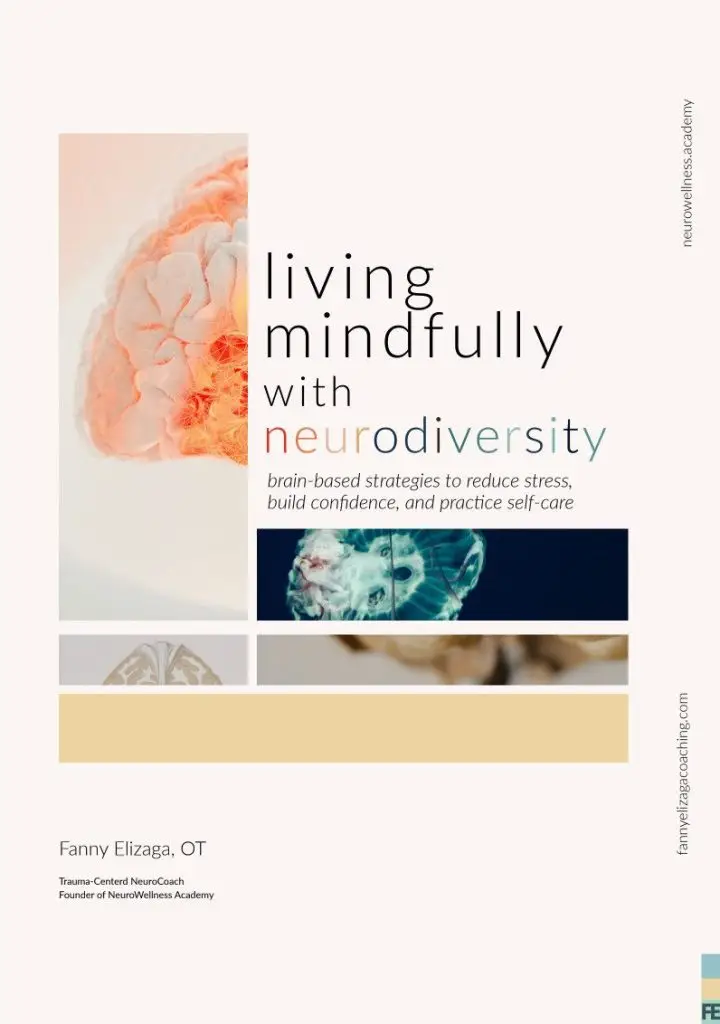
Each section of Living Mindfully with Neurodiversity comes with practical exercises to immediately put the science into practice. This e-book teaches you how to:
- Calm cognitive overload and find peace, even in the midst of crowded and fast-paced environments.
- Use metabolic nutrition and mindful eating to boost focus, mood, and energy.
- See your sensitivity as a strength and set healthy boundaries.
- Adopt brain-friendly strategies to feel more confident at work, at home, and with the people you love.
Meet Fanny Elizaga, OT & Trauma-Centered NeuroCoach

I’m Fanny — an Occupational Therapist and a Trauma-Centered NeuroCoach with almost 30 years of experience working with neurodivergent brains.. I also live with ADHD, so I understand what it feels like to be bright, sensitive, and overwhelmed at the same time.
I founded the NeuroWellness Academy to help people move from stress and self-doubt to clarity, confidence, and calm.
In my work, I blend brain-based tools, mindfulness and somatic practices and simple daily habits that support emotional balance.
The strategies in this e-book are the same ones I teach to executives, creatives, students, and adults who once believed their neurodivergence was a problem.
Today, it’s their superpower.
I’m so glad you’re here.
With warmth,
Fanny